
1. When did you realise you wanted to be a designer?
Beth: When working for a brilliant global creative PR / PA agency in a communications role, I had the opportunity to work with some seriously bright brand strategists who set me on this path – moving away from media, which was never my sweet spot.
Alex: I have always enjoyed the arts from a young age. I remember a Dalí talk I had at school when I was 8 and that really captured my imagination, and I loved trying to copy Monet paintings around the same time. Another memory was when I was around 13 and we had to copy a Roy Lichtenstein painting using the box method. It was so fun as it looked almost like the original (in my mind) and I thought I was good at it. So that little fire started then. Later on I loved artists like David Carson – his mixed style of design and art was super cool.
My dad was always making weird and funny inventions around the house, which I also loved, so that mix of arts and play was a fundamental part of my upbringing. Also, being heavily dyslexic, I turned to the arts more as they brought a lot of enjoyment into my life and felt a lot easier.
2. How did you get started and what was the biggest hurdle you overcame?
Beth: Technically I only got started when I decided to quit a leadership role in a different, more traditional PR agency that really didn’t suit me, with no place to go next! That was a hurdle – finding my feet and confidence in a different space to my norm. But I soon started working directly with some wonderful charity clients and FORM was born shortly after.
Alex: My biggest hurdle was definitely being dyslexic. Back then, at the age of 5, 6, 7, it wasn’t widely known, so I just had to work harder than everyone else (which was something my mum said to me). So the biggest hurdle was to just keep trying and not give up. Also, reading out loud was very, very hard and embarrassing, so I never really wanted to do that. During my early career, standing up and reading out a pitch idea or a narrative was horrible, but the more I did it the easier it became. I also enjoy it now!
3. What’s been your most successful way of getting clients?
Beth: Definitely via our existing network of clients and colleagues amassed from our 20+ years in industry. Reputation is everything.
Alex: Talking to people, face to face, getting to know people and asking for help. It is actually really hard to do this! And as we have only been running for 3.5 years, we are still learning what’s the best approach. I’ll tell you one approach that is not successful: sending a LinkedIn message saying ‘I think your brand needs an update!!’ An early-years learning curve for you!
4. How do you get clients to stay with you and use you for more work?
Beth: Most of our clients come to us strictly on a rebrand project basis. But once we develop their strategy with a brand idea that transcends the organisation, it’s clear how we can continue to help with campaigns or initiatives inspired by that idea moving forwards.
Alex: Creating a relationship which feels more like a partnership, not an agency–client relationship. Sometimes though, once the project is done, it’s fine to move on. I think I have also learned not to do work which is outside what you do! For me the power is in saying what you do and don’t do. Otherwise you can end up doing work which isn’t your thing, and that doesn’t help anyone.
5. Do you ever have issues with clients paying late? How do you manage that?
Beth: Luckily we haven’t had this issue!
Alex: Yes of course, but you just chase and make sure you have the account details and the details of the person who is paying. Nowadays we run 14-day payment terms, as life is a lot faster now. We also use Xero and have set up payment reminders which run automatically.
6. What does your typical work day look like?
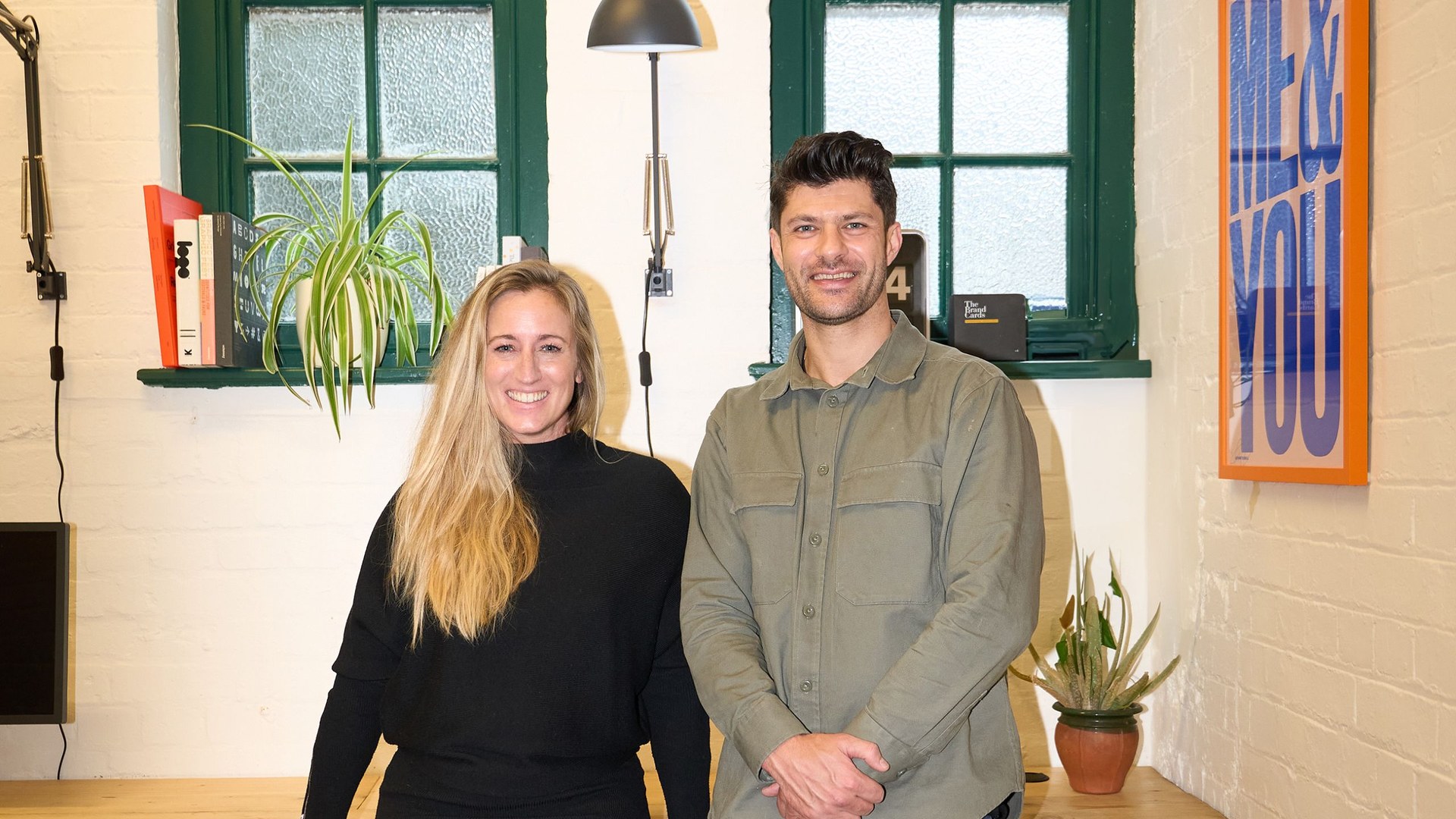
Beth: Firmly flexible. I often start work early in the morning when my energy is at its best, before taking the kids to school even. We work in an office a short stroll from our home in east London and I’ll be offline again for school pick-up. I’m useless after 3pm in terms of brainpower! Alex (FORM’s co-founder and my husband) gets more energy as the day goes on, and will often work later, so we’re a rolling service of sorts.
Alex: Wake up with one of the kids in the bed with us. We have a 4-year-old and a 2-year-old, so nights are a little tiring! But up at 6:30am, downstairs for breakfast, school drop-off at 8:30 and then into the studio for 9:30 via a walk through the woods. Often there are a lot of meetings, so we need to plan the day very carefully, balancing meeting time with design time and business development time. I try to get to CrossFit at 12:30 for an hour. This clears my mind and makes me a better person all round. Continue work until around 5:30 and back home to look after the kids. Cook, bedtime and then chill with a bit of TV – bed at 11. And it all starts again.
7. How do you manage working together and also being married?
Beth: We have such different remits in terms of expertise and have always bounced off each other creatively, so working together works well, especially when we are actively supporting clients. It gets trickier with the actual running of the business as we both have to be so involved and proactive. We’ve recently started working with a non-exec board, which has been brilliant for us. We leave marriage out of work easily, but often fail to leave work at work and find ourselves mulling over a brand idea at breakfast.
Alex: Good question. We are still learning and it is hard, which is the first thing to acknowledge, understand and respect. We learnt early on that I am an evening person and Beth is a morning person. So let’s not talk about work before work or after – let’s keep that space free. This helps a lot; those simple boundaries are healthy. We also work in different areas: she does the strategy and words, I do the design and pictures. So it’s clear what we do differently and we respect each other’s talent to do the best thing. We plan the week on a Monday and try to support and help each other when we can.
8. Any piece of advice/wisdom that you’d like to give the readers at This Design Life?
Beth: Work with nice people who challenge you – creatively, intellectually, all of it. It will only ever make you better.
Alex: I suppose my advice, if you are about to set up an agency and move from the freelance world, is to get a few fundamentals in place first. Understand cashflow and profit and loss properly. Give yourself space to breathe. I noticed that even if I put in more hours, the results were the same, so understand that it’s quality not quantity. Give yourself some love – it’s so easy to fall into the trap of the ‘I am shit and this is shit’ vibe, but if you can quieten those voices (which for me is doing CrossFit) then you can create a balanced life. I love our setup now. It was hard at the start and still is, but being around my kids a lot gives me so much joy that it’s all worth it.




0 Comments